
Reduce midday heat without sacrificing daily light
Start with 20–30% exterior shade on bright summer days. Keep morning and late-afternoon light as open as practical, and use 30% only where measured heat and radiation justify it. On cloudy or low-light days, reduce shade or keep the screen retracted.
Why cucumber female flowering is sensitive to midday heat
Flower-bud development begins before flowering and can be disturbed by high temperature, water stress and intense radiation. These conditions may shift female-flower position, weaken buds and reduce fruit set.
Cucumber also needs steady daily light accumulation. All-day heavy shade can lower PAR and DLI, producing soft growth, pale leaves and lower flower quality. Shade only the strongest heat peak when possible.
Starting shade ranges for cucumber
| Growing situation | Shade range | Operating window | Priority |
|---|---|---|---|
| Spring or autumn, clear weather | 10–20% | Short midday period | Ventilate before shading |
| Summer greenhouse | 20–30% | Around 10:30–15:30 | Exterior shade and airflow |
| High heat with intense radiation | 25–30% | Temporary peak use | Protect flowers and growth |
| Cloud, winter or low light | 0–15% or closed | Only when needed | Preserve PAR and DLI |
Use these values as a starting range. Measure PAR, canopy temperature, humidity and flower condition; dust, overlap, stretch and screen age change the result. Compare shade-net specifications →
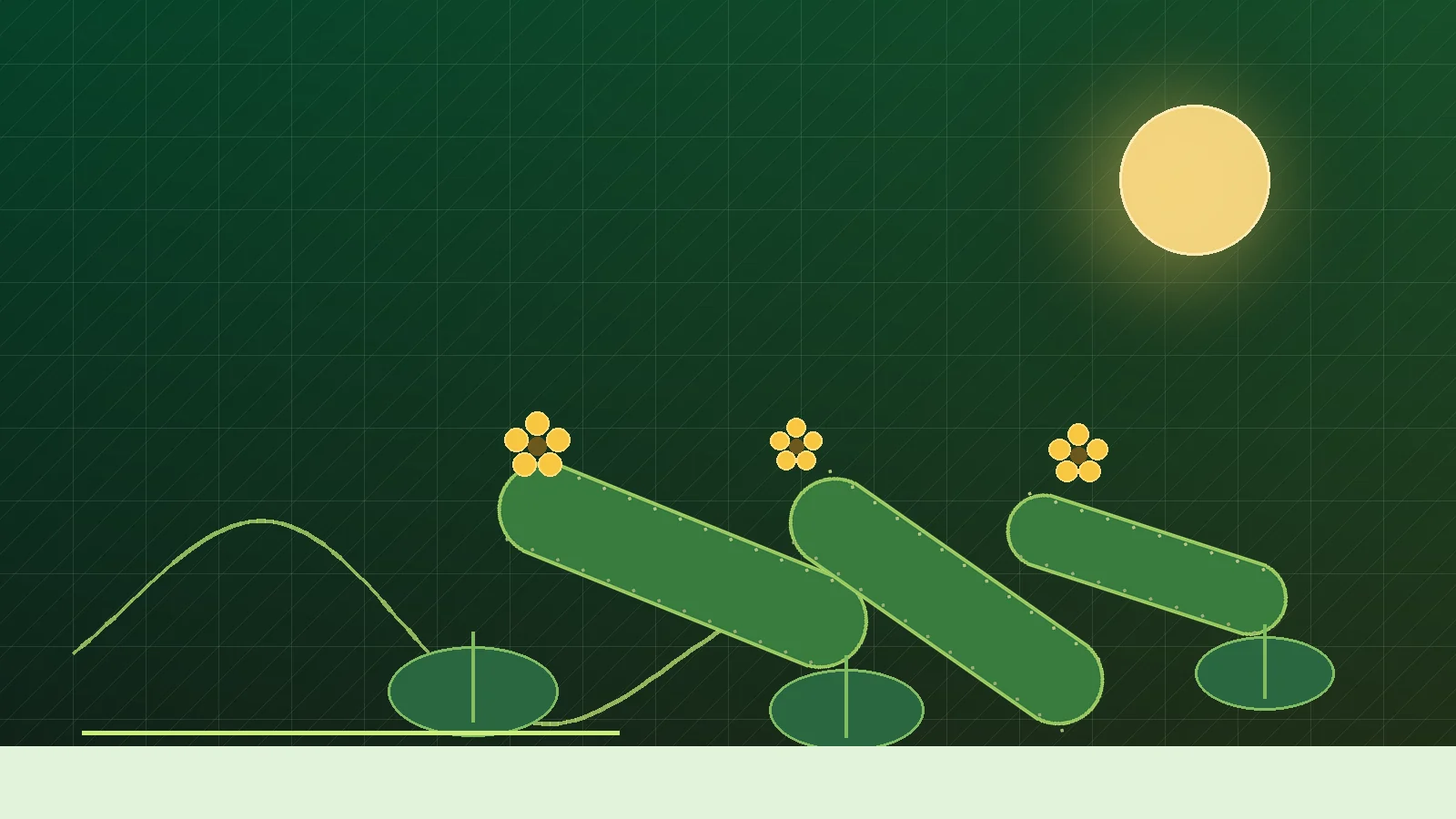
How to operate a cucumber shade net
An exterior screen above the roof usually reduces radiation before it enters the greenhouse. An internal screen must be taut, well above the canopy and coordinated with vents and circulation.
Open the screen before the heat peak and retract it when radiation or canopy temperature falls. Record female-flower node, flower size and fruit set so the setting is judged by crop response, not temperature alone.
Measure before changing
Record midday PAR, canopy temperature, humidity and flower condition for several representative days.
Shade the heat peak
Run the selected shade level through the strongest midday radiation only.
Keep air moving
Vent and circulate beneath the screen so heat and humidity are not trapped around the crop.
Recheck irrigation
Shaded plants transpire less; verify root-zone moisture and drainage before keeping the same irrigation plan.
Early signs that the shade setting needs adjustment
Inspect flowers, growth and root-zone conditions together before making another large shade change.
- Small buds, weak female flowers or poor fruit set after hot periods.
- Long internodes, thin leaves or pale growth indicating too much shade.
- Condensation or long leaf-wetness periods below the screen.
- Uneven flowering caused by a sagging, overlapping or dirty screen.
Review the screen for the crop and greenhouse
Send the crop stage, greenhouse type, installation position, dimensions, target shade level and destination. Final construction and performance basis are confirmed in quotation.
Discuss a shade-net project ↗Cucumber shade-net questions
How much shade is suitable during female flowering?
A practical starting point is 20–30% for strong midday sun, with more open conditions in cloudy or low-light weather.
Does a shade net increase female flowers?
Shade is not a direct flowering treatment. It can reduce heat and light stress, while variety, temperature and crop management also influence female-flower formation.
Should the screen be outside or inside?
An exterior screen usually removes more radiant heat before it enters. An internal screen needs strong ventilation and clearance above the canopy.
Why do cucumbers wilt at midday even after shading?
Check water availability, EC, root health, vent area and crop load. Shade alone cannot correct every source of midday stress.