
Treat shade as recovery support for the first few days
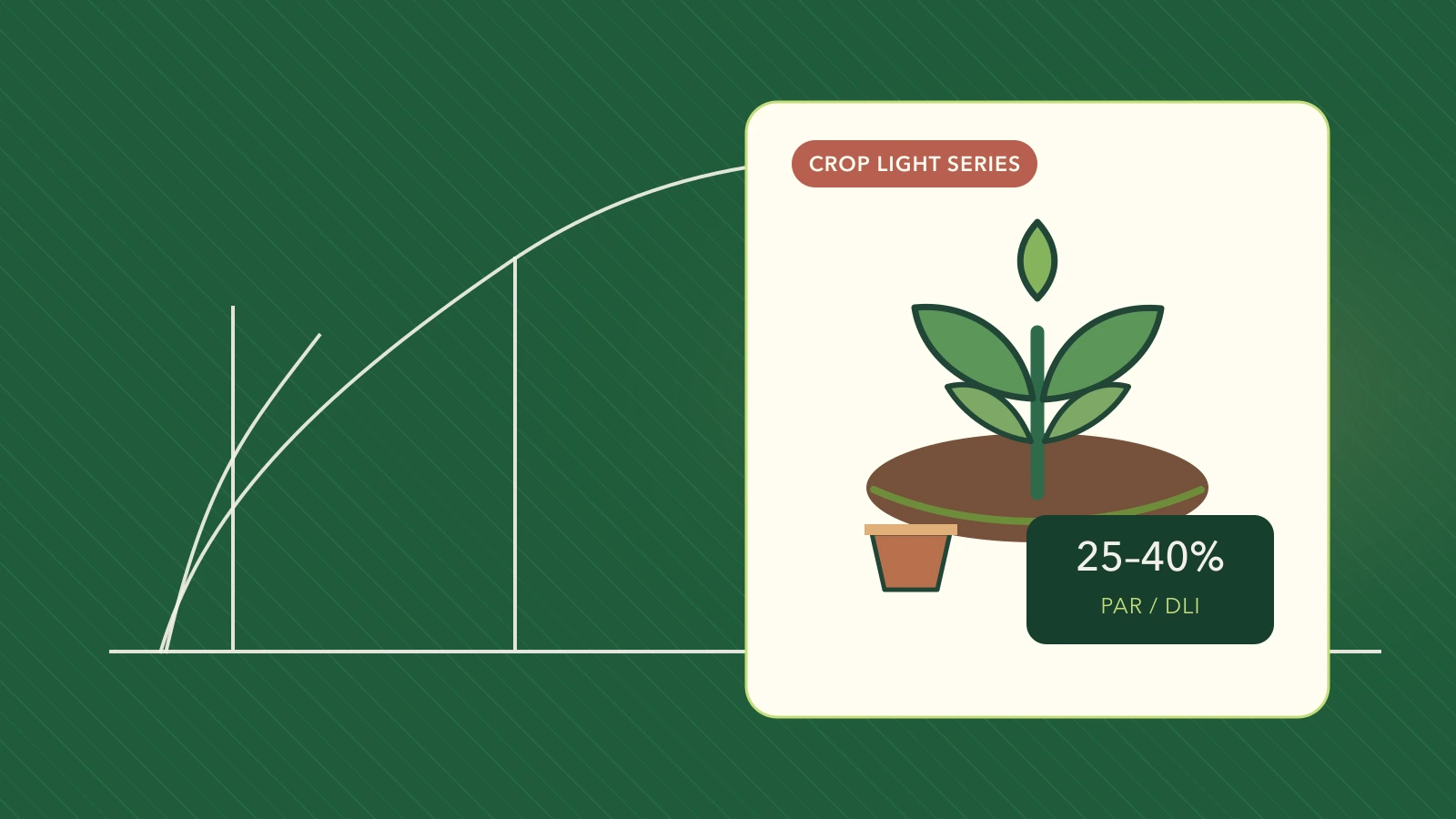
Start with 25–40% shade for recently transplanted or stressed young plants, then reduce toward 15–25% as roots establish and leaves recover turgor. The exact schedule depends on crop, sunlight, temperature and the condition of the root system.
Why young plants need temporary shade
A transplant disrupts water uptake while leaves continue losing water. Strong radiation can then push leaf temperature up before the roots can replace the water deficit. Temporary shade lowers the immediate radiation load and gives the plant time to recover.
Too much shade creates a different problem. The stem stretches toward light, new leaves become thin, root development slows and the plant becomes harder to harden later. Shade should therefore be a transition, not a permanent nursery default.
Starting ranges after transplanting
| Stage | Starting shade | Typical duration | Decision priority |
|---|---|---|---|
| Fresh transplant, hot sun | 30–40% | First 2–4 days | Prevent wilting and leaf burn |
| Recovering young plant | 25–35% | Approximately 3–7 days | New roots and steady turgor |
| Established transplant | 15–25% | Short midday use | Prevent stretching |
| Hardened plant | 0–15% | Only for exceptional heat | Restore daily light |
These ranges are planning points. A crop grown under low light before transplanting may need a slower transition, while vigorous plugs can be acclimated faster.
A practical hardening-off schedule
Use short, visible adjustments rather than a single fixed percentage for the whole season. Raise or retract the screen earlier in the afternoon, leave more light on cloudy days, and watch the plant response before the next step.
Days 0–2
Use the upper recovery range and maintain high humidity around the leaf without keeping the root zone waterlogged.
Days 3–5
Reduce shade if leaves remain turgid through midday and new growth is visible.
Days 6–10
Use shade mainly around the heat peak. Expose the plants to morning and late-afternoon light.
After establishment
Retain a low shade level only where the crop and local heat require it. Aim for steady compact growth.
Five checks that prevent over-shading
- Leaves stay turgid through the middle of the day after the first recovery period.
- New roots reach the substrate or soil instead of remaining concentrated at the original plug.
- Internodes remain compact and new leaves develop normal thickness.
- Soil or substrate dries at the expected rate rather than remaining constantly wet.
- Plants tolerate increasing morning and late-afternoon light without scorch or collapse.
Specify the nursery shade system
Send the crop, stage, climate, greenhouse or field structure, target shade range, roll width and fixing method. Final shade, construction and installation details are confirmed in the quotation.
Discuss a nursery shade-net project ↗Young-plant shade questions
How long should young plants stay under shade after transplanting?
A common starting point is 3–7 days, but the crop, weather, root condition and propagation history determine the exact schedule. Reduce shade as new growth and leaf turgor recover.
Does color alone determine shade-net performance?
No. Nominal shade, construction, porosity, yarn, installation and the test basis all matter. Compare the complete product and working environment.
Is more shade always safer for seedlings?
No. Excessive shade can stretch stems, reduce root activity and delay hardening. Use enough protection to support recovery, then restore light deliberately.