
Shade the heat peak, not the entire growing day
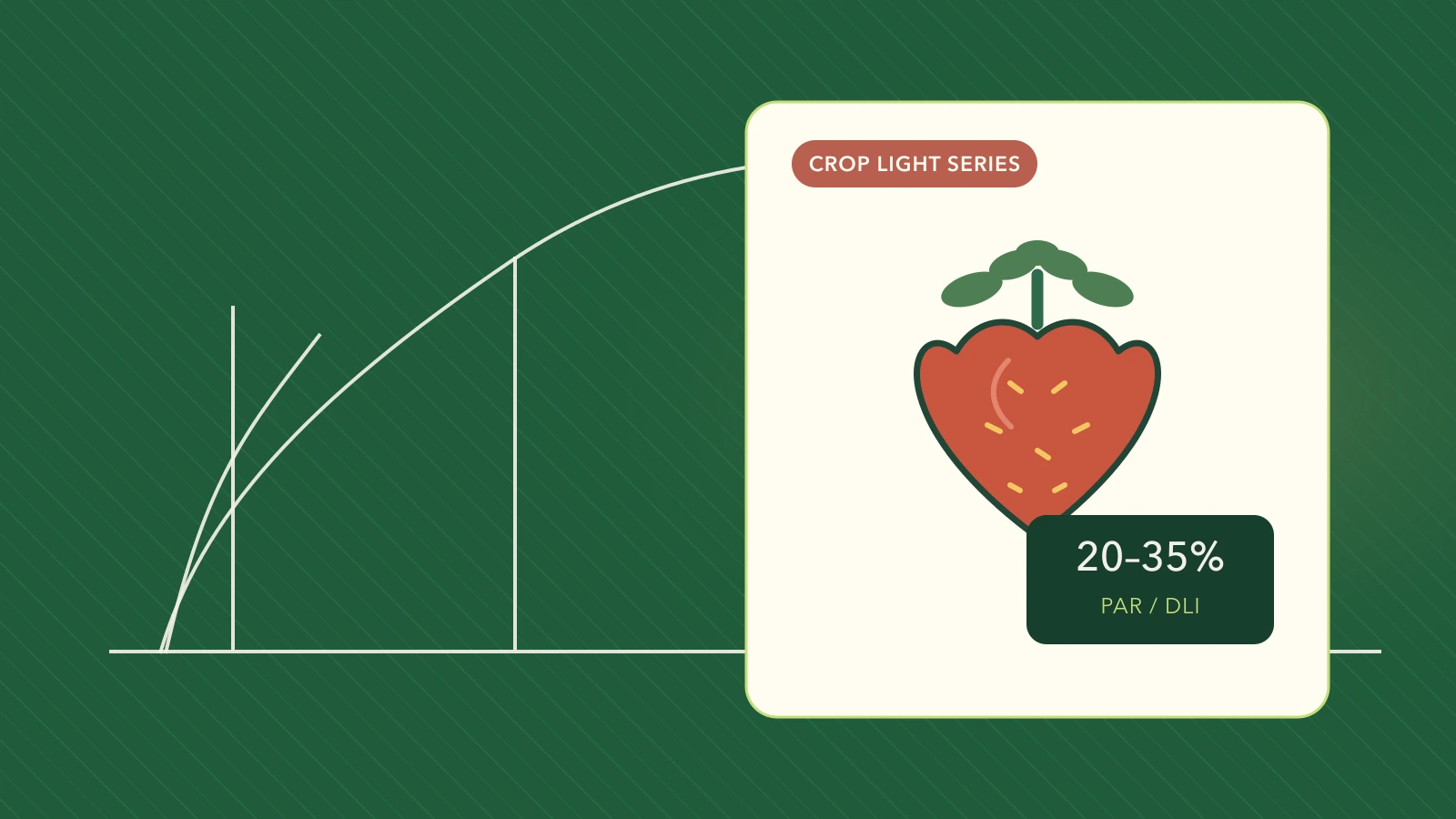
For hot summer conditions, start with 20–35% shade during the strongest midday radiation. In moderate light or cool weather, begin closer to 10–20% or ventilate first. Retract the screen when radiation falls, and confirm the specification against the greenhouse type, cultivar and local climate.
Why flowering strawberries need careful shade
Strawberry flowers, pollen and developing fruit can be damaged by high temperature, intense radiation and low humidity. A screen can lower the radiation reaching the crop, but excessive shade may reduce photosynthesis, delay ripening and produce softer or less sweet fruit.
The useful target is to reduce peak stress without turning a light-demanding crop into a shade crop. The screen should work together with roof and side ventilation, irrigation and the greenhouse’s air volume.
Starting shade ranges by growing situation
| Growing situation | Starting shade | Operating window | Priority |
|---|---|---|---|
| Cool spring or autumn | 0–15% | Only during unusual heat | Protect daily light |
| Established crop, moderate summer | 15–25% | Around the midday peak | Ventilate first |
| Hot summer flowering and harvest | 20–35% | Approximately 10:30–15:30 | External shade plus airflow |
| Severe heat or exposed roof | 30–35% briefly | Short emergency period | Protect flowers and fruit |
These are planning ranges, not a performance guarantee. Screen age, contamination, stitch pattern, installation height and ventilation all change the result.
Installation and operating sequence
An external screen intercepts solar radiation before it reaches the greenhouse. If an internal screen is used, keep it high above the canopy and avoid a sealed layer of hot air over the crop. Fix the fabric without water pockets, sharp folds or contact with flowers and fruit.
Control the screen from radiation, canopy temperature and humidity. Do not use one timer setting for every sky condition. On cloudy days, recover light early; during a heat event, deploy before the greenhouse has already accumulated heat.
Measure the baseline
Record PAR, air temperature and humidity at canopy height on a representative sunny day.
Deploy before the peak
Close the screen before canopy temperature reaches its maximum, then retract when the heat load falls.
Keep air moving
Open vents and circulation with the screen. Shade is not a substitute for removing humid air.
Review irrigation
Shading changes transpiration. Check substrate moisture and drainage rather than keeping a fixed timer.
What to record after deployment
- Flower quality and bee or pollinator activity during the shaded period.
- Fruit surface temperature and signs of sun damage on exposed rows.
- Canopy PAR and estimated DLI for sunny and cloudy days.
- Humidity, condensation and disease pressure under the screen.
- Leaf color, internode length and ripening speed for evidence of too much shade.
Match the screen to the greenhouse
Send the growing region, greenhouse structure, strawberry stage, target shade range, required roll dimensions and installation position. The final construction and performance basis are confirmed in the quotation.
Discuss a strawberry shade-net project ↗Strawberry shade-net questions
Is 50% shade suitable for flowering strawberries?
Consider it only as a short emergency measure in severe heat with strong airflow. Normal all-day use can reduce daily light and slow fruit development.
Can shade replace ventilation?
No. Shade reduces incoming radiation, while ventilation removes heat and humid air. A shaded greenhouse can still become hot and humid if vents and circulation are inadequate.
Should the screen stay closed on cloudy days?
Usually not. Follow radiation and temperature, and recover daily light whenever the crop is not at risk.